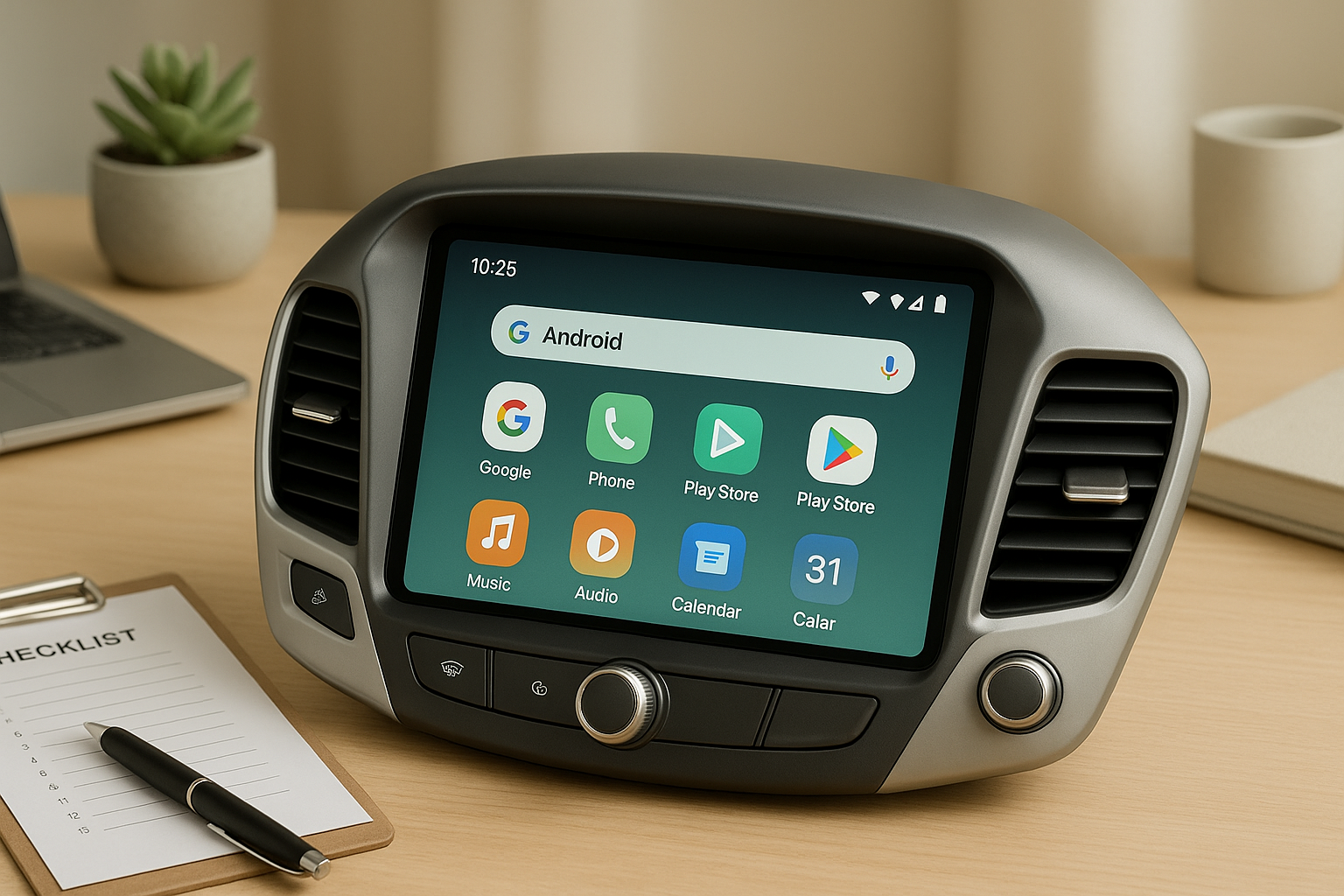
When entering the U.S. automotive market with Android-based car multimedia systems, suppliers face strict requirements. From compatibility with Android Auto to adhering to safety regulations, every detail matters. This checklist simplifies the process, ensuring your system meets technical, regulatory, and quality standards. Key areas include:
- Product Compatibility: Ensure hardware and software align with U.S. vehicle architectures and Android Auto requirements.
- Installation Standards: Follow U.S. wiring protocols and provide clear, step-by-step guides.
- Regulatory Compliance: Meet FCC and NHTSA standards to avoid market entry delays.
- Quality Control: Test for durability in extreme temperatures and ensure seamless performance.
- Documentation & Support: Provide user-friendly manuals, compliance certificates, and robust after-sales service.
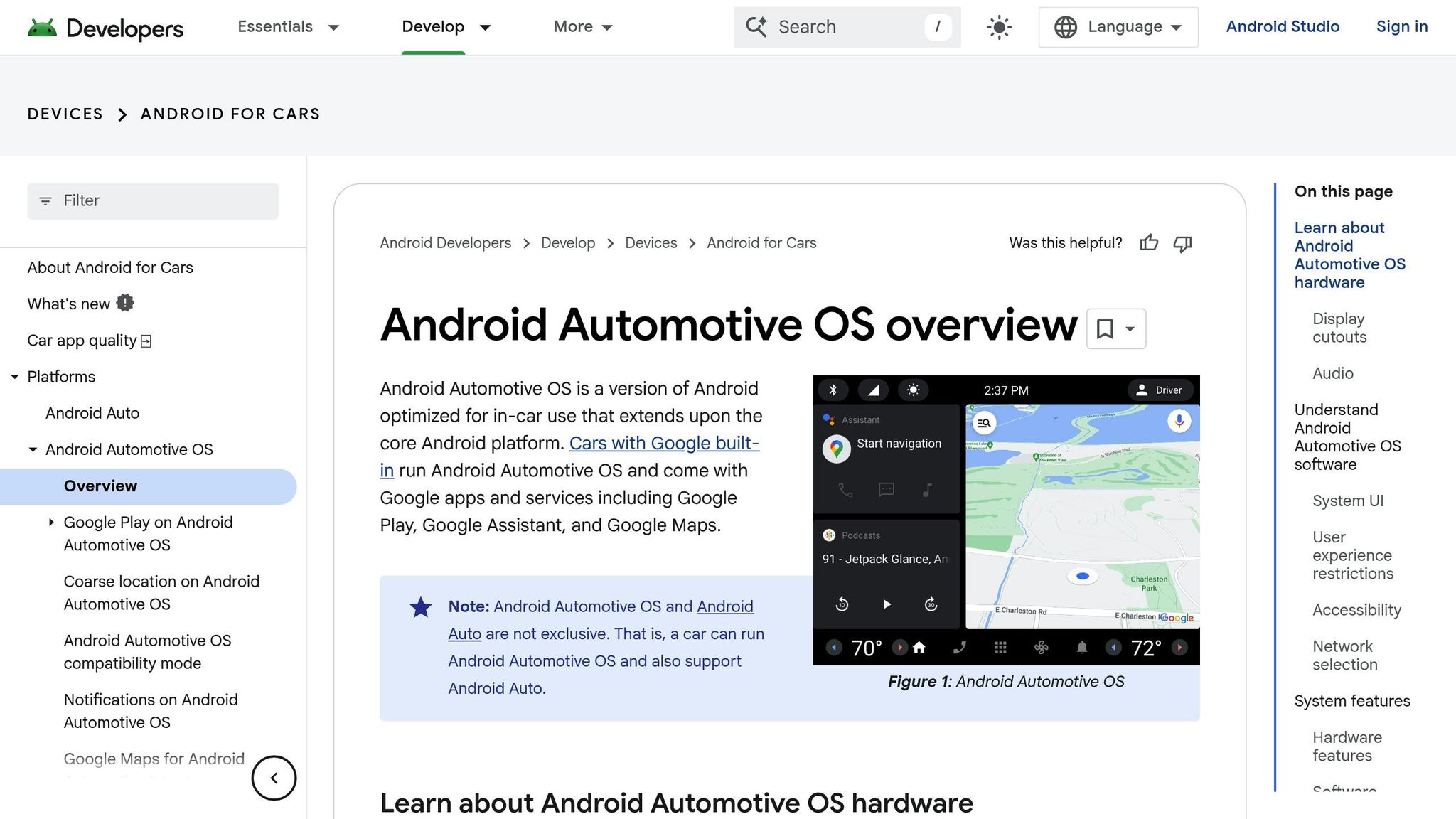
An Introduction to Android Automotive OS – Chris Simmonds – NDC TechTown 2021
Product Compatibility and Integration
Android car multimedia systems need to meet strict technical and compatibility standards tailored for U.S. vehicles. Suppliers must ensure that their products work seamlessly across various vehicle architectures while maintaining consistent performance across different makes and models.
Vehicle Compatibility and Android Auto Requirements
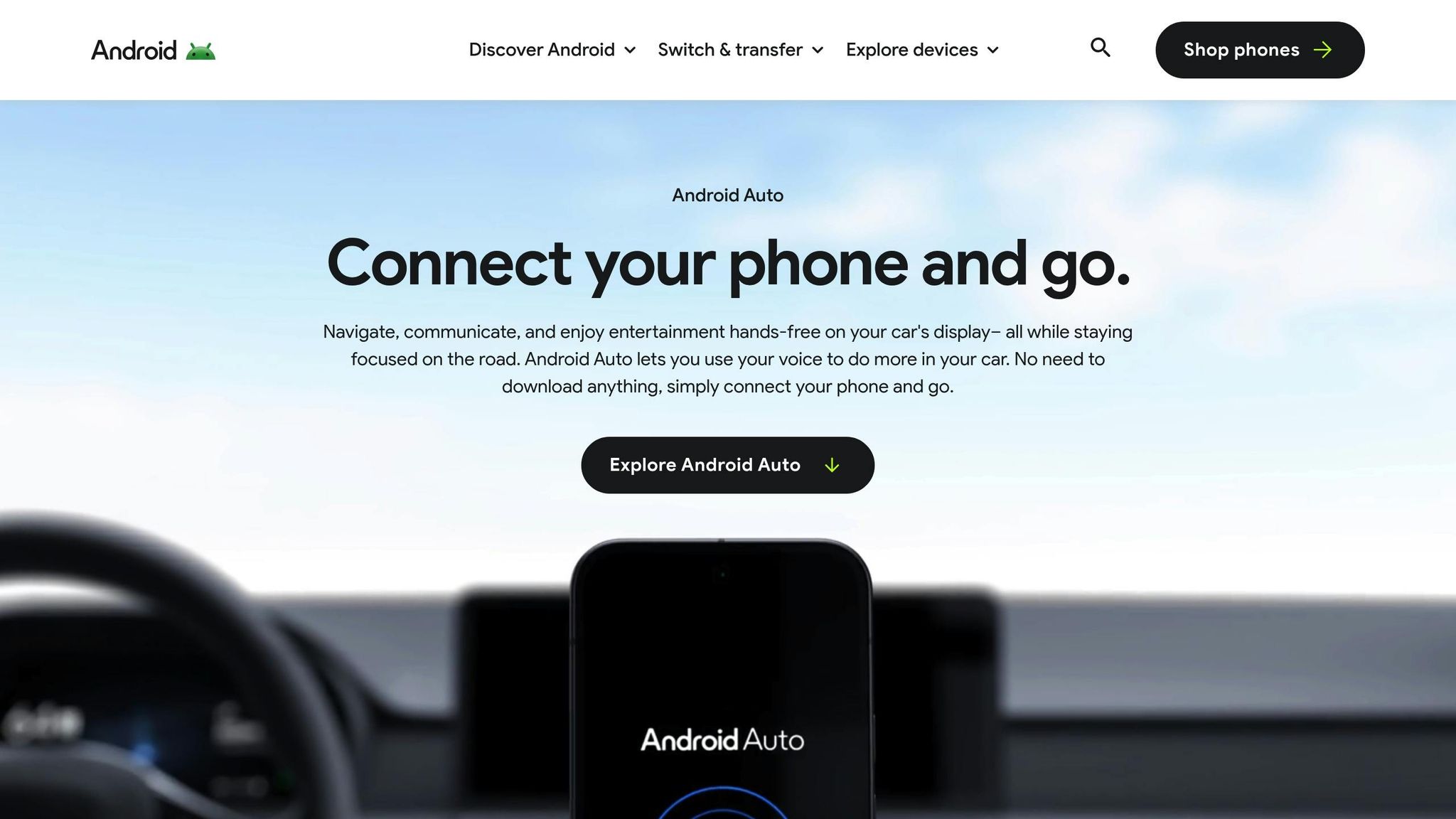
In the U.S. market, Android Auto compatibility is a must. For wired Android Auto, the system requires Android 9.0 or higher and a high-quality USB cable. Wireless Android Auto, on the other hand, demands Android 11.0 or newer (with certain exceptions for specific Google and Samsung devices), along with 5 GHz Wi-Fi on the phone and built-in car Wi-Fi [2][3].
The head unit must also be Android Auto certified. This certification ensures that the device adheres to Google’s technical and functional standards, such as minimum screen resolution, messaging protocols, and audio requirements [1][4]. Certified devices display the Android Auto logo, signaling reliability and compatibility to consumers.
| Connection Type | Phone OS Requirement | Additional Requirements |
|---|---|---|
| Wired Android Auto | Android 9.0 (Pie) or higher [2][3] | High-quality USB cable and USB data port |
| Wireless Android Auto | Android 11.0 or select Google/Samsung devices [2][3] | 5 GHz Wi-Fi on the phone and built-in car Wi-Fi |
Meeting these connectivity standards requires hardware and software that deliver reliable performance.
Hardware and Software Specifications
Hardware for Android car systems must align with both vehicle design constraints and Android Auto requirements. Most U.S. vehicles accommodate standard single DIN or double DIN head units, making these form factors crucial in system design.
The system needs sufficient RAM and processing power to handle real-time navigation, audio streaming, and voice commands. Google also sets minimum standards for screen resolution and size to ensure touch responsiveness and visibility under various lighting conditions [1][4].
Storage capacity should be ample to support cached map data, music libraries, and system updates. Additionally, audio integration must cater to the specific amplifier and speaker configurations found in U.S. vehicles, which often feature premium sound systems. Proper interfacing with these setups is critical for delivering high-quality audio experiences.
OEM/ODM Customization Options
Customization allows multimedia systems to meet brand-specific and vehicle-specific needs. U.S. manufacturers often require extensive customization to reflect their brand identity and unique vehicle features. This includes branded boot screens, interface themes, and logo integration to align with the manufacturer’s design language.
Software configurations must also be flexible, enabling OEMs to tailor features based on trim levels or market segments. For example, higher-end models might include advanced navigation tools, while base models focus on core connectivity features. YeeElek’s OEM/ODM services provide options for branding and software customization, helping manufacturers fine-tune systems to their exact requirements.
Customization can also extend to integrating vehicle functions like climate control, seat adjustments, or advanced driver assistance systems (ADAS). To support these integrations, suppliers must design Android systems with open APIs and adaptable architectures.
For successful OEM partnerships, detailed documentation is essential. This includes technical specifications, integration guides, compliance certificates, and support materials like training resources. Suppliers also need to maintain production flexibility to meet the tight delivery schedules typical in the U.S. automotive market.
Installation and Technical Requirements
Installing Android car multimedia systems in the U.S. requires careful attention to safety and adherence to local automotive standards. Following these steps ensures a smooth and compliant installation process.
U.S. Vehicle Installation Guidelines
Safety should always come first when installing a multimedia system. Begin by setting the parking brake and disconnecting the negative battery cable to prevent electrical shorts or accidental airbag deployment [5][6].
You’ll need a few key tools to get started, including screwdrivers, a wrench or socket set for the battery cables, wire strippers, electrical tape, and a panel removal tool to carefully remove dash panels without causing damage [5][6].
Each vehicle might have a different factory stereo mounting method, so it’s important to understand how the current system is installed. Some stereos use spring clips, while others are bolted in or mounted on rails. Keep track of the removal steps to make reassembly easier and avoid issues later [5][6].
Pay close attention to wiring connections. Use vehicle-specific wiring harnesses with color-coded diagrams to simplify the process. For bare wires, solder them and use heat-shrink tubing, crimp them with the correct gauge connectors, or opt for Posi-Product™ connectors. Avoid relying solely on electrical tape for connections [5][6].
- Red wire: Connect to switched power (active only when the ignition is on).
- Yellow wire: Connect to constant power (to retain memory settings).
- Ground wire: Attach to a clean, unpainted bolt or screw that makes solid contact with the chassis [5][6].
Once the basic installation is complete, you can move on to integrating the vehicle’s control interfaces.
Vehicle Control Integration
After installing the system, the next step is integrating control interfaces to ensure everything works seamlessly. Many modern U.S. vehicles come with advanced control systems that the multimedia unit must support. For speaker wiring, a standard 4-speaker system will typically have eight wires – one positive and one negative for each speaker. Follow the wiring diagrams to match these connections correctly [5][6].
Additionally, connect all necessary components at the back of the stereo, including:
Camera System Compatibility
Once the control interfaces are set, focus on adapting the camera wiring. Connect the emergency/parking brake wire to enable the safety-activated video display [5][6].
Before finalizing the installation and securing the stereo in place, reconnect the battery and thoroughly test all stereo functions to ensure everything is working as expected. Some vehicles might require modifications to the dash opening or internal structure to accommodate the new stereo, so be prepared for those adjustments if needed [5].
sbb-itb-e12833d
Quality Control and Regulatory Requirements
Meeting quality standards and adhering to U.S. regulations require thorough testing and strict compliance measures.
Testing and Durability Standards
Once installed, multimedia systems undergo rigorous testing to ensure they can handle long-term use under the diverse conditions found on U.S. roads. These systems must operate reliably in extreme temperatures ranging from -40°F to 185°F. Additionally, components are tested for resistance to vibration, humidity, and salt spray to confirm their durability across varied environmental conditions.
Specific tests focus on ensuring touchscreen responsiveness over time and maintaining the security of all components.
Power supply stability testing is another critical step. This ensures systems can handle voltage fluctuations caused by engine starts, battery charging by alternators, or the simultaneous operation of multiple electrical systems. Even during cold weather starts (when voltage dips) or highway driving (when voltage spikes), the systems must function without interruption.
U.S. Automotive Regulation Compliance
Durability isn’t enough – systems must also comply with regulatory requirements to ensure safe integration with vehicles. The Federal Communications Commission (FCC) mandates that all electronic devices meet electromagnetic compatibility standards. Part 15 certification ensures multimedia systems don’t interfere with radio communications, GPS signals, or other electronics in the vehicle.
Safety regulations aim to reduce driver distraction. For instance, multimedia systems must disable video playback while the vehicle is in motion. Touchscreen interfaces are required to feature large, easy-to-access buttons that minimize the time drivers need to look away from the road.
Privacy is another critical area. As these systems collect and transmit user data, they must provide clear disclosures about what information is being gathered, how it will be used, and how users can control their data. This applies to sensitive data like location tracking, voice recordings, and smartphone integration.
The National Highway Traffic Safety Administration (NHTSA) guidelines emphasize proper integration with vehicle safety systems. Multimedia systems must not interfere with essential safety features like airbag deployment, anti-lock braking systems, or electronic stability controls.
Additionally, cybersecurity measures are crucial to protecting vehicles from hacking attempts. Secure boot processes, encrypted communications, and regular security updates are necessary to safeguard the vehicle’s systems from unauthorized access.
U.S. Market Documentation Requirements
Clear, well-structured documentation is essential for the U.S. market. All user manuals, installation guides, and technical documentation must be written in American English and follow standard U.S. conventions.
Warranty documents should clearly outline coverage periods, what’s included, and how customers can request service. Typically, warranties range from one to three years, with detailed explanations distinguishing normal wear and tear from defective components.
Installation instructions must include precise wiring diagrams that align with U.S. vehicle electrical standards. Color coding should adhere to American automotive conventions, and safety warnings must be prominently displayed and easy to understand.
Products also need to include compliance certificates from accredited labs. These certificates confirm that products have passed required tests and meet all applicable regulations. Certificates should include test results, lab accreditation details, and explicit statements of regulatory compliance.
Finally, product labeling must meet specific requirements. Labels should display FCC ID numbers, power consumption in watts, and operating temperature ranges in Fahrenheit. They must be permanently affixed and remain legible throughout the product’s lifespan. Comprehensive documentation not only supports technical reliability but also demonstrates adherence to regulatory standards.
15-Point Supplier Checklist
Here’s a detailed checklist to guide suppliers in delivering Android car multimedia systems that align with U.S. market expectations. These 15 points break down the essential requirements for creating products that can thrive in the competitive U.S. automotive aftermarket.
Points 1-5: Product Compatibility
1. Android Auto Integration:
Ensure smooth Android Auto integration with proper handshake protocols, fast connection speeds, stable data transfer, and automatic device recognition, whether through USB or wireless connections.
2. Operating System Requirements:
Equip the system with a recent Android version to enhance security and compatibility. Include enough memory and storage to handle multiple applications running simultaneously without lag.
3. Multimedia Format Support:
Make sure the system supports popular video and audio formats, including high-resolution audio and widely used video compression standards, to offer a top-notch multimedia experience.
4. Screen Specifications:
Design screens that perform well in all lighting conditions, from bright daylight to nighttime, and ensure touch responsiveness – even when users are wearing gloves.
5. Vehicle Control Integration:
Incorporate seamless integration with essential vehicle controls such as steering wheel buttons, sensor inputs, and reverse camera triggers using reliable CAN bus connections.
Points 6-10: Installation and Features
Expanding on compatibility, these points focus on installation and key features.
6. Bluetooth and Wi-Fi Capabilities:
Include advanced Bluetooth for stable connectivity and audio streaming. Ensure Wi-Fi supports multiple frequency bands, uses strong security protocols, and maintains a reliable connection even at higher speeds.
7. U.S. Installation Standards:
Follow U.S. wiring and installation standards. Provide clear, detailed diagrams to simplify integration with factory setups.
8. OEM/ODM Customization Options:
Offer customization options for OEM/ODM partners, such as boot logos, interface themes, pre-installed apps, and adjustable default settings (e.g., time zones, Fahrenheit, and miles).
9. Camera System Readiness:
Ensure compatibility with backup cameras via both analog and digital interfaces. Support features like automatic reverse switching and options for multi-camera or 360-degree views with minimal latency.
10. GPS and Navigation Integration:
Incorporate reliable GPS functionality with offline mapping to ensure accurate positioning, even in urban areas with signal challenges.
Points 11-15: Quality Control and Support
The final points emphasize quality testing and support measures critical for success.
11. Quality Testing Protocols:
Adopt rigorous quality testing, including temperature cycling to simulate extreme conditions, vibration tests, and extended burn-in periods to verify durability.
12. Warranty Coverage:
Provide a comprehensive warranty covering both parts and labor. Clearly differentiate between normal wear and manufacturing defects, and include software updates and technical support.
13. Regulatory Compliance Verification:
Ensure compliance with all relevant U.S. regulations. Secure certifications for electromagnetic compatibility and adhere to safety standards for drivers.
14. Technical Documentation:
Create detailed technical documentation, including installation manuals with step-by-step photos and troubleshooting guides. Use American spelling and measurement units consistently.
15. After-Sales Support Structure:
Set up a robust after-sales support system with service available during U.S. business hours. Offer clear firmware update instructions and maintain a stock of spare parts for quick replacements.
Conclusion: Meeting U.S. Market Requirements
Breaking into the U.S. automotive market means delivering top-notch quality while meeting strict safety standards, consumer preferences, and installation protocols.
The 15-point framework outlined earlier acts as a guide to creating products that not only meet technical requirements but also resonate with what American drivers expect. From ensuring compatibility with the wide variety of vehicles on U.S. roads to producing documentation that aligns with American standards, gaining the trust of U.S. suppliers and installers is key to a successful market launch.
Quality assurance plays a huge role in earning consumer trust. U.S. buyers demand products that can handle extreme conditions – think Arizona’s scorching 120°F summers or Minnesota’s freezing -20°F winters – without sacrificing performance. Your testing processes must mirror these real-world scenarios to prove reliability and durability, which are essential for building long-term relationships.
Compliance with U.S. safety and regulatory standards is non-negotiable. Meeting FCC electromagnetic compatibility requirements and adhering to driver safety regulations isn’t just a box to check – it’s the backbone of any successful product offering. These regulations should guide every step of your product development process.
YeeElek’s 15-day production timelines and OEM/ODM customization options make it easier to adapt quickly to the specific needs of the U.S. market. Whether it’s addressing the unique demands of American auto manufacturers, wholesale buyers, or retailers, this level of flexibility ensures your products meet varying branding, feature, and technical requirements.
Finally, strong documentation, clear warranty terms, and dependable after-sales support are critical for customer satisfaction. American installers and end-users expect straightforward instructions, responsive technical support during U.S. business hours, and warranties that cover both parts and labor. Offering this level of post-sale support is just as important as meeting technical and safety standards – it’s what keeps customers coming back.
FAQs
What should U.S. automotive suppliers consider for Android Auto compatibility?
To make sure Android Auto works in U.S. vehicles, suppliers need to confirm that the car’s infotainment system supports either a USB connection or wireless Android Auto. The system software should be updated to at least Android 9.0 (Pie) or a newer version. While wireless Android Auto is becoming more common in newer vehicles, both the car and the smartphone must support this feature. The smartphone also needs to run Android 9.0 or higher to ensure full compatibility.
Suppliers should double-check compatibility with specific vehicle models and verify that all necessary hardware and software components align with current industry standards. This ensures a smooth and reliable in-car entertainment experience for users.
How can automotive suppliers adapt Android multimedia systems to meet specific OEM or ODM requirements?
Automotive suppliers have the flexibility to tailor Android multimedia systems to align with the specific needs of OEMs or ODMs by customizing the user interface (UI). This involves adjusting visual components – like colors, layouts, and icons – to match the brand’s design language and functionality goals, creating a unified and recognizable in-car experience.
Beyond aesthetics, suppliers can incorporate vehicle-specific controls. For example, they might program custom input events to accommodate unique features such as specialized buttons or touch gestures. Performance optimization is another critical area, whether it’s minimizing boot times or designing home screens that prioritize ease of use and efficiency. These adjustments ensure the system operates smoothly and meets the expectations of the manufacturers.
By concentrating on these elements, suppliers can develop multimedia systems that not only enhance in-car entertainment but also align seamlessly with the technical and branding requirements of OEMs and ODMs.
What are the key regulatory steps for launching Android-based car multimedia systems in the U.S.?
To bring Android-based car multimedia systems to the U.S. market, meeting safety, cybersecurity, and connectivity regulations is a must. Authorities like the NHTSA and FCC set these standards, and compliance involves several critical steps:
- Making sure the systems align with federal safety standards for electronics and vehicle connectivity.
- Performing thorough testing to confirm the system’s performance, reliability, and security.
- Following data privacy and consumer protection laws to ensure secure communication and proper handling of user information.
Keeping track of regulatory updates is key to ensuring your product remains compliant while delivering a safe and dependable experience for users.
