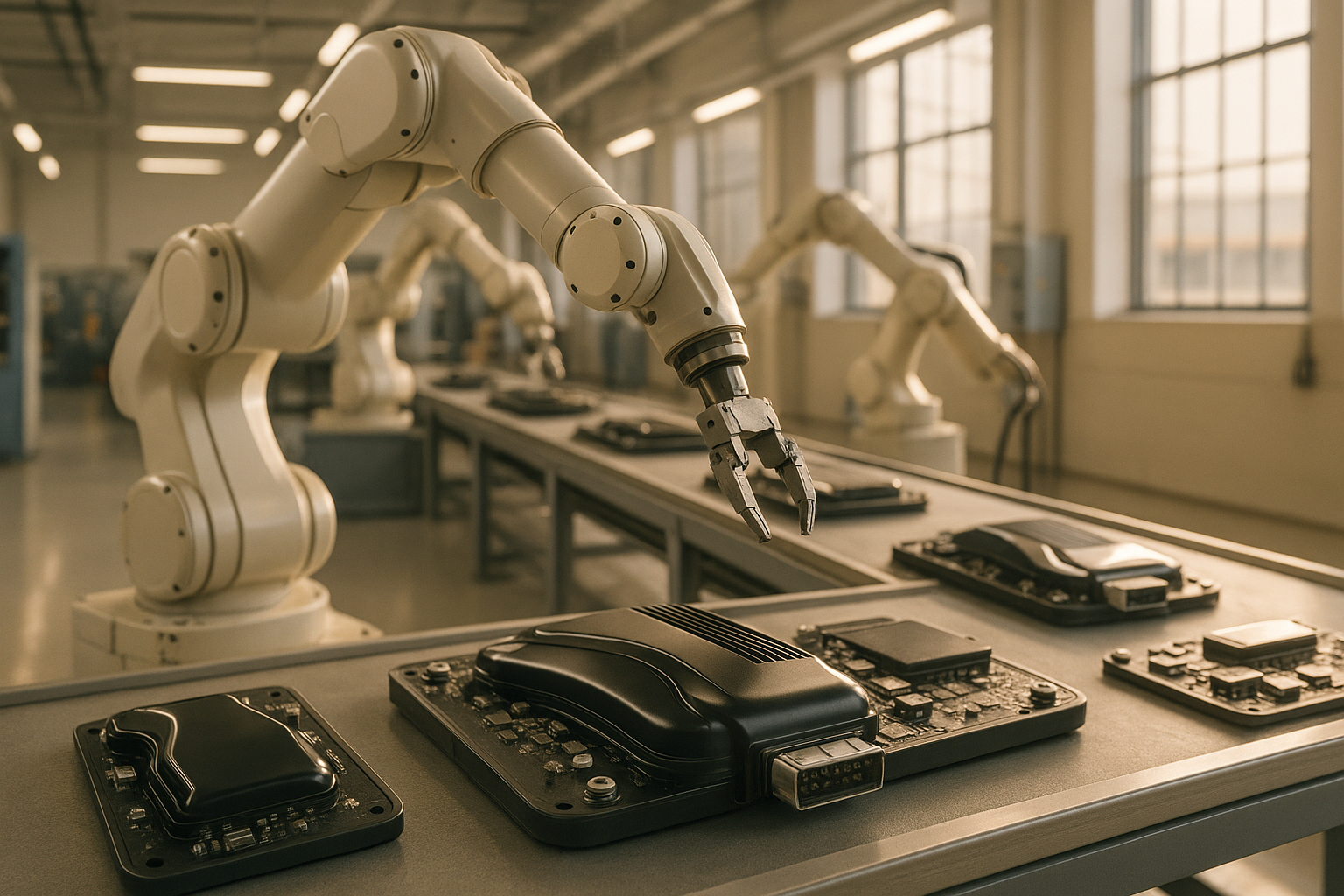
Reducing production time for car electronics is critical for staying competitive in a fast-paced market. Here’s the key to achieving it: automation, lean practices, efficient supply chains, and faster design processes. These strategies not only cut costs but also improve delivery speed without compromising quality.
Key Takeaways:
- Automation: Use robotics, SMT for PCB assembly, and automated testing to minimize errors and speed up production.
- Lean Manufacturing: Eliminate waste, optimize workflows, and reduce equipment changeover times with approaches like SMED.
- Supply Chain Efficiency: Implement JIT strategies, strengthen supplier relationships, and use digital tools for real-time tracking.
- Faster Design & Prototyping: Leverage software tools, 3D printing, and quick-turn PCB fabrication to shorten development cycles.
These methods ensure manufacturers can meet tight deadlines, adapt to changing demands, and maintain high-quality standards in car electronics production.
I.C.T Advanced DIP Production Line with JUKI Automated Insertion for Automotive Electronics

Using Automation and Advanced Manufacturing Technologies
The landscape of car electronics production is being reshaped by modern automation technologies. These advancements streamline processes, tackle production bottlenecks, reduce human errors, and speed up manufacturing stages. By incorporating robotics, precision assembly, and intelligent quality control systems, manufacturers can enhance efficiency and lay the foundation for leaner production practices.
Automation in Assembly Lines and Robotics
Robotic assembly lines are at the core of efficient car electronics manufacturing. These systems excel at handling repetitive tasks with precision and consistency. For instance, pick-and-place robots can position tiny components on circuit boards with pinpoint accuracy.
The advantages are clear: robotic systems deliver far greater throughput than manual assembly while maintaining uniform quality. Collaborative robots, or cobots, take it a step further by working alongside humans on tasks like cable routing or connector installation. Unlike traditional industrial robots that require safety barriers, cobots are designed to safely operate near people, making them ideal for hybrid work environments.
Vision-guided robots bring another layer of sophistication. Equipped with cameras and AI, they verify component placement and detect defects in real time. This reduces reliance on manual inspections and ensures the high-quality standards needed in automotive electronics.
Surface-Mount Technology (SMT) for PCB Assembly
Surface-Mount Technology (SMT) has revolutionized PCB (Printed Circuit Board) assembly by allowing components to be mounted directly onto the board’s surface. Unlike traditional through-hole techniques, SMT eliminates the need for drilling holes or manually inserting components.
This approach offers significant speed advantages over manual methods. It also enables higher component density and more compact circuit designs – critical for automotive electronics, where dashboard space is often at a premium.
SMT is also highly efficient when it comes to material usage. By applying solder paste through stencils, it ensures precise amounts are used, cutting down on waste and simplifying cleanup. Additionally, reflow ovens used in SMT production can process multiple PCBs at once, providing a faster and more efficient thermal process compared to older soldering methods.
Automated Testing and Quality Control Systems
Automated testing systems play a pivotal role in maintaining product quality while reducing inspection times. In-Circuit Testing (ICT) systems, for example, quickly assess the electrical functionality of assembled PCBs, making the process faster and more efficient than manual testing.
Automated Optical Inspection (AOI) systems use high-resolution cameras and advanced algorithms to spot defects like missing components or soldering errors. These systems can scan large areas quickly and with impressive accuracy.
Functional testing systems go a step further by simulating real-world conditions to evaluate features such as touchscreen performance, audio quality, navigation capabilities, and overall system functionality. These automated tests are not only faster but also more thorough than manual alternatives.
Environmental stress testing has also been automated, using climate chambers to expose products to varying temperatures, humidity levels, and vibrations. This ensures that automotive electronics are reliable under the demanding conditions they’ll face in real-world use.
Applying Lean Manufacturing Practices for Efficiency
Lean manufacturing has reshaped the production of car electronics by cutting out waste and fine-tuning every step of the process. The goal? To deliver high-quality automotive electronics faster, while using fewer resources. This approach is especially critical for safety-focused systems, where precision and reliability are non-negotiable.
The methodology targets eight types of waste: overproduction, waiting, transportation, over-processing, inventory, motion, defects, and unused creativity. In the world of car electronics, these could take the form of excessive stockpiles of components, long setup times between production runs, or repetitive quality checks that bog down the assembly line.
Using Lean Manufacturing Principles
A key starting point for lean manufacturing is value stream mapping. This involves charting every step of the production process – from raw materials to finished products – to uncover inefficiencies and bottlenecks. For instance, mapping might reveal that components sit idle between assembly stations or that workers spend extra time searching for tools. These insights provide a clear roadmap for targeted improvements.
Another cornerstone of lean practices is Kaizen, which encourages input from all levels of the organization to drive small but impactful changes. In car electronics production, this could mean reorganizing workstations to cut down on unnecessary walking, standardizing where tools are placed, or creating simple fixtures to speed up component installation.
Pull systems replace outdated push-based production schedules by aligning production directly with demand. For car electronics manufacturers, this means building items like multimedia systems or dashboard displays only when orders come in, avoiding large, costly inventories.
To maintain consistency across shifts and operators, standardized work procedures are crucial. Detailed instructions outlining task sequences, required tools, and quality checkpoints help reduce variability that could otherwise slow production or compromise quality.
Preventing mistakes before they happen is another key focus, achieved through error-proofing techniques like poka-yoke. Examples include connectors designed to fit only one way, color-coded components to avoid mix-ups, or sensors that detect missing parts before moving to the next production stage. These measures enhance both speed and quality.
Building on these principles, reducing equipment changeover times with SMED (Single-Minute Exchange of Die) further accelerates production.
Reducing Changeover Times with SMED
SMED complements lean methods by slashing the downtime required to switch equipment between different product runs. The goal is to cut setup times to under 10 minutes, allowing manufacturers to quickly shift from producing one type of infotainment system to another.
The SMED process follows four structured steps. First, it separates internal activities (which require equipment stoppage) from external ones (tasks that can be done while the line is still running). Many tasks traditionally done during downtime – like gathering tools or prepping materials – can often be shifted to external operations, significantly reducing delays.
Next, the focus shifts to optimizing internal activities. Strategies like replacing bolted connections with quick-release clamps, using adjustable fixtures to minimize fine-tuning, and adding visual guides to ensure accurate first-time setups can all speed up the process. Tools like color-coded systems and clear markings also help operators work more efficiently.
Continuous improvement is a critical part of SMED. Teams can time each step, identify bottlenecks, and brainstorm solutions. Recording changeover processes on video can reveal unnecessary motions and highlight areas for improvement.
When SMED is implemented effectively, it delivers dramatic results. Shorter changeover times allow manufacturers to produce smaller batches more frequently, reducing inventory levels and enabling faster product delivery. This flexibility not only improves cash flow but also aligns seamlessly with automation and design improvements, creating a faster, more responsive production system.
sbb-itb-e12833d
Improving Supply Chain and Just-in-Time (JIT) Strategies
A well-organized supply chain is the backbone of fast and efficient production. When delays happen or inventory piles up, production slows, and costs rise. By combining just-in-time (JIT) strategies with streamlined supply chain management, manufacturers can keep operations running smoothly. This approach lays the groundwork for using JIT manufacturing and digital tools to further refine production processes.
In the world of automotive electronics, sourcing components is no small feat. Challenges like semiconductor shortages, shipping delays, and the complexity of parts demand careful coordination between suppliers and production teams. The solution lies in creating systems that offer real-time insights and allow for quick reactions to any supply chain hiccups.
Just-in-Time Manufacturing in Automotive Electronics
The essence of JIT manufacturing is simple: materials arrive exactly when they’re needed, not earlier or later. This minimizes excess inventory, cuts storage costs, reduces waste from outdated parts, and frees up capital for other priorities.
Accurate demand forecasting is the foundation of JIT success. By analyzing past production data, seasonal trends, and customer orders, manufacturers can predict their needs with precision. This ensures supplier agreements and delivery schedules align perfectly with production requirements.
Strong supplier partnerships are another cornerstone of JIT. Instead of treating suppliers as mere vendors, manufacturers build close, collaborative relationships. These partnerships often include shared production schedules, quality expectations, and clear communication protocols to ensure a steady flow of materials. In many cases, suppliers even establish warehouses near manufacturing plants or work with logistics providers to guarantee quick deliveries.
To balance efficiency with reliability, buffer management comes into play. While JIT aims to keep inventory lean, manufacturers maintain small safety stocks of critical components, especially those with long lead times or single sources. For automotive electronics, this might include items like specialized microprocessors, custom displays, or unique connectors – essential parts that could halt production if unavailable.
Timing is everything in JIT. For example, components for car multimedia systems often arrive through coordinated deliveries, where multiple suppliers synchronize shipments to ensure all parts for a production run arrive together. This reduces complexity and ensures production stays on schedule.
Another key tactic is using milk runs, where a logistics provider picks up components from multiple suppliers on a set route and delivers them in one trip. For instance, semiconductors from one supplier, displays from another, and cables from a third might all arrive in a single delivery. This approach cuts transportation costs and ensures predictable schedules.
Digitizing the Supply Chain for Real-Time Visibility
While JIT focuses on optimizing material flow, digital tools provide the oversight needed to prevent disruptions. These tools allow manufacturers to monitor supply chains in real time, enabling them to act quickly and keep production on track.
For instance, supply chain management software centralizes everything – tracking orders, monitoring schedules, and sending alerts about potential delays. When integrated with enterprise resource planning (ERP) systems, production schedules can automatically adjust to reflect supply chain changes.
Electronic data interchange (EDI) takes communication between manufacturers and suppliers to the next level by automating processes like purchase orders and delivery confirmations. This eliminates manual errors and speeds up procurement.
Technologies like RFID tracking and barcode systems offer real-time updates on component locations. As parts move through the supply chain, scanning provides instant updates, so manufacturers know exactly where critical components are and when they’ll arrive.
Supplier portals are another game-changer. These web-based platforms let suppliers access production forecasts, confirm deliveries, and flag potential issues. This transparency helps suppliers plan better, ensuring smoother operations for everyone involved.
With predictive analytics, manufacturers can identify potential disruptions before they happen. By analyzing historical data, weather conditions, and supplier performance, these tools can forecast delays and suggest alternative sourcing options. For example, if a primary supplier shows signs of delay, manufacturers can quickly switch to a backup.
Finally, integration with production systems ensures supply chain data directly influences manufacturing decisions. If a delay is detected, the system can reschedule production, notify customers, or trigger orders from alternative suppliers. This seamless integration eliminates the lag between identifying issues and taking action.
Speeding Up Product Design, Prototyping, and Customization
The design and development phase often slows down the production of car electronics. While supply chains and manufacturing processes can be optimized, creating new products or tailoring existing ones for specific clients demands a different approach. To meet today’s tight production deadlines, rapid design and prototyping have become just as important as efficient manufacturing. Streamlined design processes can significantly reduce the time it takes to get a product market-ready, much like automation and lean practices have done for production lines.
Automotive electronics manufacturers are under growing pressure to deliver customized solutions faster than ever. OEM clients expect quick turnarounds for branded multimedia systems, and market trends increasingly lean toward personalized features. Long design cycles and multiple prototype iterations are simply not practical in this fast-moving industry.
Using Software Solutions to Streamline Design
Modern software tools are transforming the way products are designed, making the process faster and more efficient by reducing the need for physical prototypes.
- Parametric design tools: These tools let engineers create flexible templates that can be easily adjusted to meet different client needs. For instance, in Android car multimedia systems, engineers can tweak screen sizes, button layouts, or connectivity options without starting from scratch. If a client requests a 10.1-inch display instead of a 9-inch one, the design adapts automatically to accommodate the change.
- Design rule checking (DRC) software: DRC tools catch potential manufacturing issues early in the design phase. They verify details like circuit trace widths, component spacing, and thermal considerations, helping manufacturers avoid costly redesigns before prototyping even begins.
- Collaborative design platforms: These platforms allow multiple team members to work on different parts of a project simultaneously. For example, one engineer might focus on the circuit board layout while another works on the user interface, and a third handles the mechanical housing. Real-time updates ensure everyone is working with the latest version, reducing miscommunication and conflicts.
- Version control systems: Designed specifically for hardware development, these systems track every change made to design files. If issues arise during testing, engineers can quickly identify and roll back problematic changes, saving time and eliminating guesswork.
Rapid Prototyping Tools for Faster Development
Advancements in prototyping technology are enabling manufacturers to significantly shorten development cycles, making it easier to test and refine designs quickly.
- 3D printing: This technology has transformed the way physical prototypes are created. Manufacturers can produce housings, brackets, and other mechanical components overnight. Industrial 3D printers offer the precision and strength needed for initial testing and client presentations.
- Quick-turn PCB fabrication: Services that provide fully assembled circuit boards in as little as 24-48 hours allow manufacturers to test multiple design variations at once. For complex Android multimedia systems, engineers can order several board configurations to evaluate different component setups in parallel.
- Modular prototyping systems: These systems use standardized connectors and interfaces, enabling engineers to rapidly assemble and test different configurations without designing custom connections for each prototype. This approach is especially useful for multimedia systems, where various display types, audio processors, or connectivity modules need evaluation.
- Virtual prototyping software: By simulating user interfaces and system behavior, virtual prototyping allows for early testing without the need for physical hardware. For Android car multimedia systems, this means engineers can test menu layouts, response times, and user workflows on a computer. Clients can even interact with these virtual prototypes to provide feedback early in the development process.
- Rapid injection molding: Using aluminum molds and streamlined processes, rapid injection molding services produce small quantities of production-quality plastic parts in just days. This makes it possible to create realistic prototypes that closely resemble the final product in appearance and feel.
Linking CAD and BOM Data for Efficiency
Integrating design and manufacturing systems is another key step in speeding up development. Automated workflows ensure that changes made during the design phase are instantly reflected in manufacturing plans, saving time and reducing errors.
- Real-time BOM validation: As engineers make design decisions, the system checks component availability and pricing. If a chosen component has long lead times or supply issues, alternatives are suggested immediately. This prevents delays caused by unavailable parts.
- ERP system integration: By connecting design data directly with procurement, inventory, and production systems, ERP integration automates tasks like generating purchase orders and updating production schedules when a design is finalized.
- Change management systems: These systems track how design modifications impact BOMs, costs, and schedules. For example, if an engineer updates a component specification, the system automatically adjusts related documents and notifies all relevant departments. This ensures everyone is working with the most current information, reducing the risk of costly mistakes.
Conclusion and Key Takeaways
Cutting down production time in automotive electronics manufacturing requires a well-coordinated approach that spans from initial design to final assembly. The strategies covered here show how manufacturers can save time while maintaining high-quality standards.
Automation and advanced technologies are at the core of speeding up production. By reducing bottlenecks and minimizing errors, automation plays a crucial role. When paired with lean practices, it takes efficiency to the next level.
Lean manufacturing principles help streamline workflows and eliminate unnecessary waste. These methods reduce changeover times and promote continuous improvement, ensuring inefficiencies are addressed before they disrupt production schedules.
An efficient supply chain is equally important. Supply chain strategies, such as just-in-time manufacturing and digital visibility tools, ensure that components arrive exactly when needed, cutting down on inventory costs and delays. Real-time tracking systems allow manufacturers to foresee potential disruptions and adjust schedules in advance.
The design and prototyping phase is another area with huge potential for time savings. With modern software and prototyping tools, development cycles can shrink from months to weeks, allowing for simultaneous testing of multiple design iterations.
FAQs
How does automation help speed up and improve the quality of car electronics manufacturing?
Automation is transforming the way car electronics are manufactured, making the process faster and more efficient. By cutting down production time and maintaining consistent quality, automated systems have become essential in handling the complexities of modern automotive electronics, like Android car multimedia systems. These systems can run continuously with minimal interruptions, dramatically speeding up production cycles.
Beyond speed, automation ensures greater precision and minimizes the risk of human error. This leads to higher-quality products that meet strict industry standards. With tools like robotic assembly lines, automated testing systems, and advanced design software, manufacturers can deliver top-notch automotive electronics while optimizing efficiency.
What are some effective lean manufacturing techniques to reduce waste in car electronics production?
Lean manufacturing techniques play a big role in cutting down waste in car electronics production by simplifying workflows and boosting efficiency. Some of the most effective practices include value stream mapping, which helps identify and remove unnecessary steps, and pull systems like Kanban, ensuring production aligns closely with customer demand. On top of that, Kaizen activities promote a culture of continuous improvement, encouraging teams to refine processes regularly.
Manufacturers can also use tools like waste assessment checklists to spot inefficiencies in areas such as inventory management, transportation, or overprocessing. By focusing on these approaches, companies can speed up production, cut costs, and still deliver top-notch quality.
What are the best strategies for manufacturers to manage supply chain issues, like semiconductor shortages, while using just-in-time production?
To tackle supply chain issues like semiconductor shortages while sticking to just-in-time (JIT) production, manufacturers can take a few smart steps. For starters, creating multi-tier inventory buffers, setting up dual-sourcing agreements, and adopting flexible procurement methods can help minimize the risk of disruptions.
Another crucial move is building stronger relationships with suppliers and using tools that offer real-time visibility into the supply chain. These measures allow manufacturers to spot potential problems early and adapt quickly, keeping production on track even when global challenges arise.
