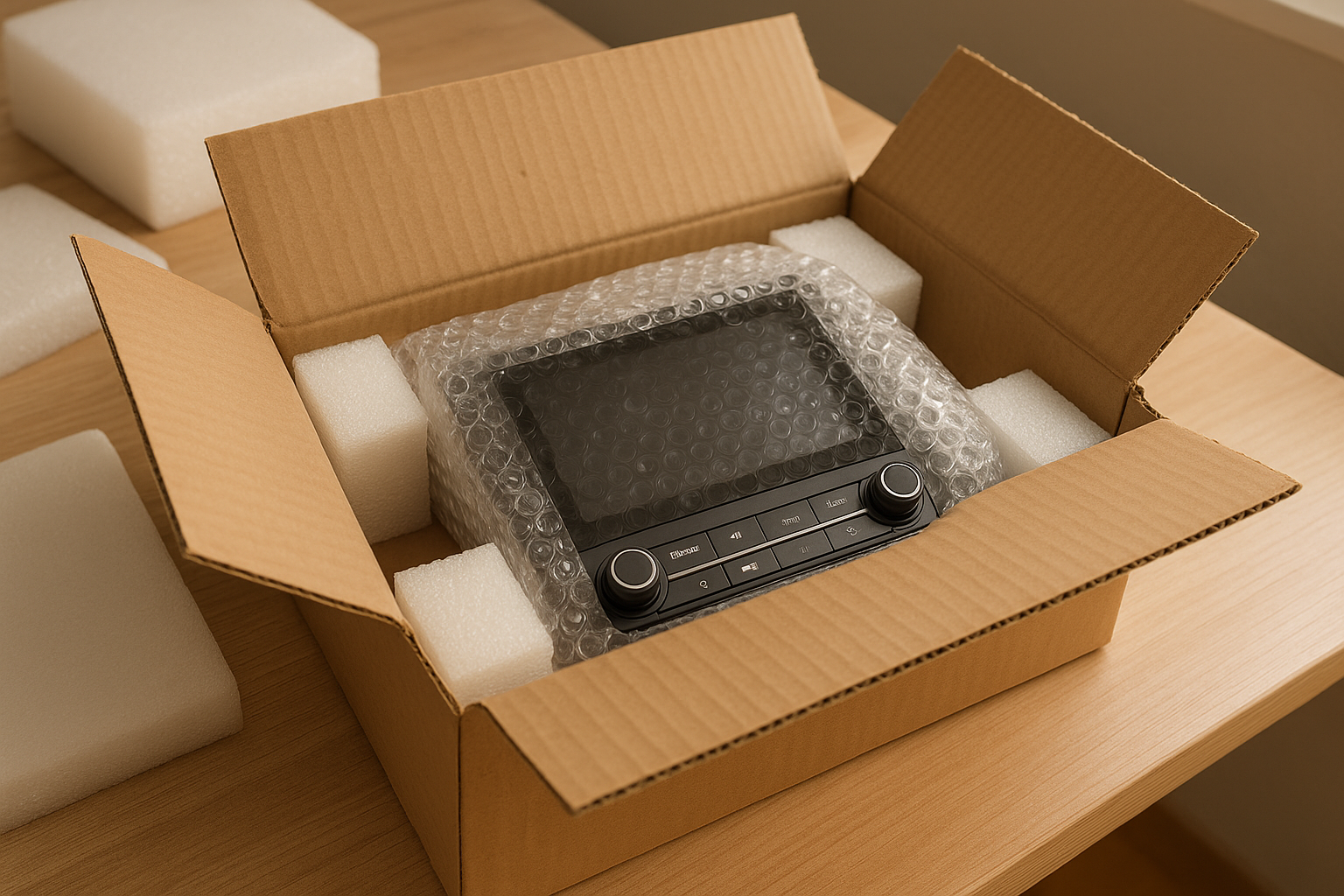
Shipping car multimedia players requires careful packaging to prevent damage. These devices are fragile, with touchscreens, circuit boards, and ports that can easily break during transit. Improper packaging can lead to cracked screens, loose connections, or even short circuits caused by moisture or static electricity. This not only increases costs through returns and replacements but can also harm your brand’s reputation.
To ship car players safely:
- Use proper materials: Anti-static bags, custom foam inserts, double-walled boxes, desiccant packs, tamper-evident seals, and shrink wrap.
- Follow a clear process: Inspect devices, clean thoroughly, package components separately, secure with foam, and label correctly.
- Ensure quality checks: Perform drop tests, moisture checks, and visual inspections.
Bulk and OEM/ODM shipments need additional care, like palletized packaging and branded solutions. Following these steps ensures your products arrive intact, keeping customers and businesses satisfied while avoiding costly disruptions.
How To Package & Ship A Car Stereo – Get It Through The Mail Unharmed!
Required Packaging Materials and Tools
Proper packaging is essential to protect Android car multimedia players during shipping. Using the wrong materials can leave your products exposed to damage, while the right setup ensures they arrive safely at their destination.
Packaging Materials You Need
- Anti-static bags: These are crucial for shielding sensitive components from electrostatic discharge. Place each electronic component in its own anti-static bag before moving on to any other packaging steps.
- Custom foam inserts: Unlike generic bubble wrap, custom foam inserts are tailored to fit the exact shape of your car multimedia players. This prevents movement inside the box and absorbs shocks while distributing pressure evenly. For instance, YeeElek has observed that using custom foam inserts significantly reduces damage during transit.
- Double-walled corrugated boxes: These provide the structural strength needed to protect electronics during shipping. Heavy-duty boxes measuring 20×20×12 inches or 24×24×18 inches work well for most car multimedia players. These dimensions allow for at least 2 inches of cushioning material on all sides, which is a standard recommendation from carriers like UPS and FedEx.
- Desiccant packs: These packs help control humidity levels by absorbing moisture, preventing condensation on circuit boards.
- Tamper-evident seals: These seals offer visible proof if a package has been opened or altered during transit, ensuring product integrity and building customer confidence.
- Shrink wrap: Applied after placing the device in its anti-static bag, shrink wrap protects against abrasions and scratches before foam protection is added.
When used together, these materials create a solid barrier to safeguard your products during shipping.
Tools for Packaging
The right tools not only enhance efficiency but also ensure consistency and reliability in the packaging process.
- Tape dispensers: These speed up the sealing process and ensure secure seals with strong packing tape. A quality dispenser also reduces hand fatigue when packaging multiple units.
- Box cutters: Essential for resizing boxes or making clean, precise cuts during quality checks without damaging the contents inside.
- Digital scales: Accurate weight measurements (in pounds and ounces) are critical for proper shipping labels. Incorrect weights can lead to delays or extra charges from carriers.
- Barcode scanners: These simplify inventory management and tracking, reducing human error in order processing. For OEM/ODM clients managing large volumes, barcode scanners are invaluable for maintaining accurate shipping records.
For shipments exceeding 80 pounds, additional tools like pallet jacks and industrial-strength strapping become necessary.
Step-by-Step Packaging Process
A careful packaging process ensures your Android car multimedia players arrive safely at their destination. Each step adds an extra layer of protection to the product.
Preparing the Car Player for Packaging
Start by inspecting each device for any visible damage, such as scratches, dents, or loose components. Take photos to document any issues you find.
Next, clean the device thoroughly. Use a lint-free cloth to remove fingerprints, dust, and residue – pay special attention to the screen and ports. A slightly damp cloth works best for this; avoid using liquid cleaners directly.
Remove any accessories, like cables, brackets, or remote controls, and package them separately. Once the device is clean, place it in an anti-static bag, making sure to press out any excess air. Wrap detachable components in their own anti-static bags to keep everything organized and protected.
Securing the Player in Protective Materials
Once the device is prepped, it’s time to add protective padding. Place the anti-static bagged device in the center of a custom foam insert. The foam should hold the device securely without putting pressure on buttons, ports, or other delicate parts.
To minimize moisture risks, include desiccant packs in the package. Fill any gaps in the box with extra foam padding or air pillows to prevent the device from shifting during transit.
Sealing and Labeling the Package
After securing the device, focus on sealing and labeling the package correctly. Use reinforced packing tape to seal the box in an H-pattern across all seams. For added security, apply tamper-evident seals where the tape meets the box edges.
Weigh the final package using a digital scale and record the weight accurately. This step ensures proper shipping costs and documentation.
Finally, apply handling labels like "Fragile", "This Side Up", and "Keep Dry" to the box. Clearly print the shipping labels with the sender and recipient addresses, along with tracking information. For international shipments, attach customs forms securely and include detailed product descriptions that match the commercial invoice.
sbb-itb-e12833d
Quality Control and Compliance Checks
Making sure packages are secure before shipping is critical. Once the packaging process is complete, quality control and compliance checks help ensure that every package meets safety and shipping standards.
Packaging Quality Control Steps
To verify that packaging meets required quality standards, conduct a series of tests and inspections on a sample of finished packages:
- Drop testing: Drop-test sample packages to check if they maintain structural integrity and keep internal components secure.
- Moisture protection checks: Use indicator cards to confirm moisture protection and ensure cushioning effectively prevents water damage.
- Visual inspection: Examine seals, seams, and overall package integrity for punctures, dents, or weak spots. Confirm that tamper-evident seals remain intact.
- Weight verification: Weigh each package to ensure it matches the expected weight. Any deviation could signal an error.
Meeting US Shipping Standards
To comply with US shipping regulations, follow these important guidelines:
- ISTA standards: Ensure packaging meets ISTA standards for resistance to compression and vibration during transit.
- Proper labeling: Verify that all shipping labels and documentation are accurate and compliant. Include full sender and recipient addresses (ZIP+4) and use the MM/DD/YYYY date format on all labels and documents.
- Documentation and traceability: Keep detailed records of package weight, dimensions (in inches), tracking numbers, and shipping dates. Store digital copies for warranty purposes and to resolve disputes.
- Hazardous materials compliance: For items like lithium-ion batteries, follow hazardous materials regulations. Use the correct hazard labels and adhere to specific shipping guidelines.
Best Practices for Bulk and OEM/ODM Shipments
Handling large-scale shipments, whether it’s bulk orders of Android car multimedia players or custom OEM/ODM products, calls for well-thought-out packaging strategies to minimize damage and keep costs manageable.
How to Package Bulk Orders
For bulk shipments, palletized packaging is a reliable choice to ensure stability during transit. Start by grouping individual units into master cartons, then stack these cartons on a pallet in an interlocking pattern. Place heavier cartons at the bottom and lighter ones on top for better balance. Secure the entire load with multiple layers of stretch wrap to keep everything firmly in place.
To further reduce the risk of damage, consider using corner guards or edge protectors – these help prevent crushing when pallets are stacked or handled. Label each master carton clearly with SKU numbers, quantities, and lot identifiers to streamline inventory tracking and quality checks.
Adding industrial-grade shrink wrap over the entire pallet offers an extra layer of protection against weather and moisture. Make sure the wrap is applied evenly for a tight and secure seal around all items.
Custom Packaging for OEM/ODM Clients
Custom packaging for OEM/ODM orders goes beyond protection – it also reinforces the client’s brand image. YeeElek provides tailored OEM packaging options that combine durability with branding. These solutions may include printing client logos on boxes, adding branded instruction manuals, and including custom warranty details.
Documentation is another key consideration. Some clients may need manuals in multiple languages or with both metric and imperial measurements. For U.S.-based clients, ensure all specifications, such as temperature guidelines and measurements, meet local standards.
To protect custom inserts or accessories, use dedicated compartments or molded foam inserts. These help keep components secure and prevent movement or damage during transit.
Even external packaging can reflect the client’s branding. For instance, using branded packing tape or approved logos on outer boxes maintains a professional appearance while ensuring the product stays protected.
Comparing Packaging Methods
When deciding on the best packaging strategy, consider the shipment size and specific requirements. For smaller orders, individual packaging offers the best protection but may involve higher labor costs. Grouping items into master cartons strikes a balance between material efficiency and protection. For large-scale shipments, palletized packaging is the most cost-effective and efficient option. Meanwhile, OEM/ODM packaging is ideal for clients needing a custom solution that combines protection with branding.
YeeElek’s ability to deliver custom packaging within a 15-day production window helps businesses plan efficiently. By carefully selecting materials, optimizing load configurations, and ensuring clear labeling, companies can minimize shipping risks while presenting products in a professional, branded manner.
Conclusion
Packaging success hinges on a well-thought-out plan – choosing the right materials, adhering to reliable processes, and maintaining rigorous quality standards. This combination ensures that shipments are protected and arrive in excellent condition.
Quality control plays a critical role, especially as customer demands grow and returns can hurt profitability in the electronics industry. Ensuring packages meet U.S. shipping standards is equally important, particularly when dealing with items like car players containing lithium-ion batteries, which require strict HAZMAT compliance to avoid costly penalties.
The packaging methods discussed here are adaptable to different business needs. Whether you’re shipping single items or bulk orders, these strategies align with the best practices mentioned earlier, offering both customization and cost-effectiveness. Companies like YeeElek showcase how well-planned packaging solutions can handle shipments of all sizes while maintaining efficiency and reliability.
FAQs
What are the best ways to protect car multimedia players from moisture during packaging?
To keep car multimedia players safe from moisture during packaging, consider using moisture barrier bags like foil or anti-static bags. These are specifically designed to block moisture and protect the devices. Including desiccant packs, such as silica gel, inside the packaging can further help by absorbing any remaining moisture, keeping the environment dry throughout shipping and storage.
These steps are crucial for protecting the devices from issues like corrosion, static damage, and performance problems, ensuring they reach their destination in excellent condition.
What steps should I follow to safely package Android car multimedia players with lithium-ion batteries for shipping in the US?
To ship Android car multimedia players with lithium-ion batteries safely within the US, it’s important to follow these steps:
- Protect the batteries inside: Wrap each battery or battery-equipped device in a non-metallic, shock-absorbing material. This reduces the risk of short circuits or damage during transit.
- Use sturdy outer packaging: Opt for strong, rigid boxes to shield the contents from impacts or rough handling.
- Follow shipping regulations: Ensure the batteries meet the UN 38.3 testing standards. The package must also display the correct hazard labels, like UN3481, as required by the Department of Transportation (DOT).
By following these steps, you’ll align with US safety standards and help prevent any issues during shipping.
What should I consider when deciding between individual packaging and palletized packaging for bulk shipments?
When choosing between individual packaging and palletized packaging for bulk shipments, it’s essential to weigh factors like efficiency, protection, and cost.
Palletized packaging works well for larger shipments. It offers better stability, makes handling easier, and helps cut down on labor costs. This option is particularly useful when shipping fragile or high-value products that need extra care during transit.
On the other hand, individual packaging might be a better fit for smaller shipments or items that aren’t as delicate. However, it often requires more manual handling, which could increase the chances of damage during transport. To make the right choice, consider the size of your shipment, the nature of your products, and your overall logistics strategy.
